|
Central America Trip Report
From September 14 to 22, 2002, a Grantmakers Without Borders delegation traveled
throughout Nicaragua and Honduras on the "Journey for Grantmakers and Donors:
Learning about Women and Sustainable Development." Co-sponsored by the Center
for Global Education and led by Mark Lester, Managua representative of the
Winds of Peace Foundation, and Kathy McBride, Center for Global Education staff
in Managua, the
group of 10 included individual donors and foundation trustees and staff.
The purpose of this travel seminar was to introduce representatives of U.S.
foundations and individual donors to grassroots social change efforts in Nicaragua
and Honduras in which women are playing a leadership role. Women were the focus
in recognition of their essential role in equitable, sustainable development.
The delegation met with women and men from close to 20 groups, including women-owned
coops, peasant farmers unions, feminist networks, organizations combating violence
against women, and Indigenous groups fighting for their land and water rights.
Here we present highlights of each visit, along with key lessons learned.
For more information on the travel seminar and this trip report,
please contact John
Harvey.
NICARAGUA
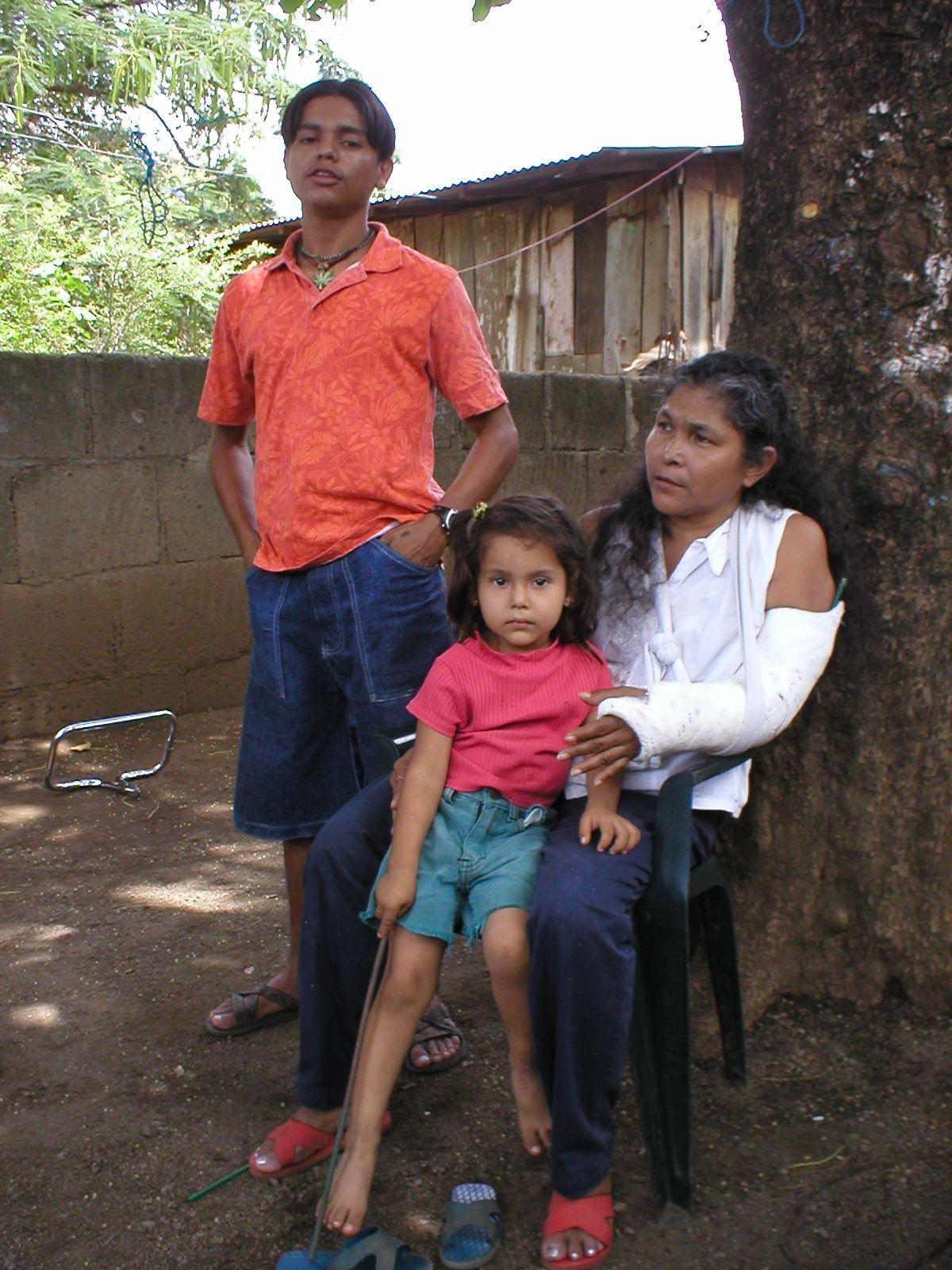
Gladys Manzanares, a union leader for women
workers of the FTZ (Free Trade Zone), spoke to participants about
the challenges facing union organizers. After 25 years of working
in maquila factories, she has experienced how difficult it is to
form labor unions but knows how critical it is to workers, especially
women workers, who are the majority in the FTZ. Gladys discussed
how the FTZ was "a double-edged sword." It provides jobs, especially
to single mothers, that can pay well compared to the options, but
there is a high social cost. The children are not cared for (there
are no child care facilities in the FTZ), and the resulting neglect
can lead to gang violence, drug abuse, and the breakdown of the
family structure. Gladys said she wished all the countries in the
FTZ would really invest in Nicaragua instead of exporting their
money, but "corruption and poverty have prepared the way for investors."
Gladys added that the investors would always be in the very poorest
places, but that "extreme poverty is the lack of spirit to love
the other."
What was learned?
- The pervasive impact of US economic and political policies and the need for
greater education about this.
- The Free Trade Zone is a double-edged sword that hurts more than it helps
workers when they are not allowed to organize.
For more information on the FTZ, please see www.fntg.org
Magda Lanuza is director of Hijos e Hijas de Maiz, an organization
working on issues related to Plan Puebla Panama (PPP), Free Trade Agreements,
debt, and the environment. She spoke with participants on the impact Plan Puebla
Panama has already had on grassroots communities--and of the even more profound
devastation they predict if it moves forward. She explained how grassroots communities
had not been consulted on PPP, even though their lives will be enormously impacted
by it. Dams will displace communities, roads will open up
environmentally sensitive areas to deforestation and mining, and Indigenous communities
will lose rights over land they have tilled for generations. Magda explained that
her organization is struggling to bring grassroots voices to the table in all
development planning, to be sure these projects reflect the needs and aspirations
of the poor, not just multinational corporations and the wealthy elites of our
country.
What was learned?
- The devastating impact of Plan Puebla Panama on rural and Indigenous communities
specifically, and on the majority of Nicaraguans in general.
- The importance of making the connection between issues of external debt, privatization,
and corruption.
For more information on PPP, please see www.fntg.org.
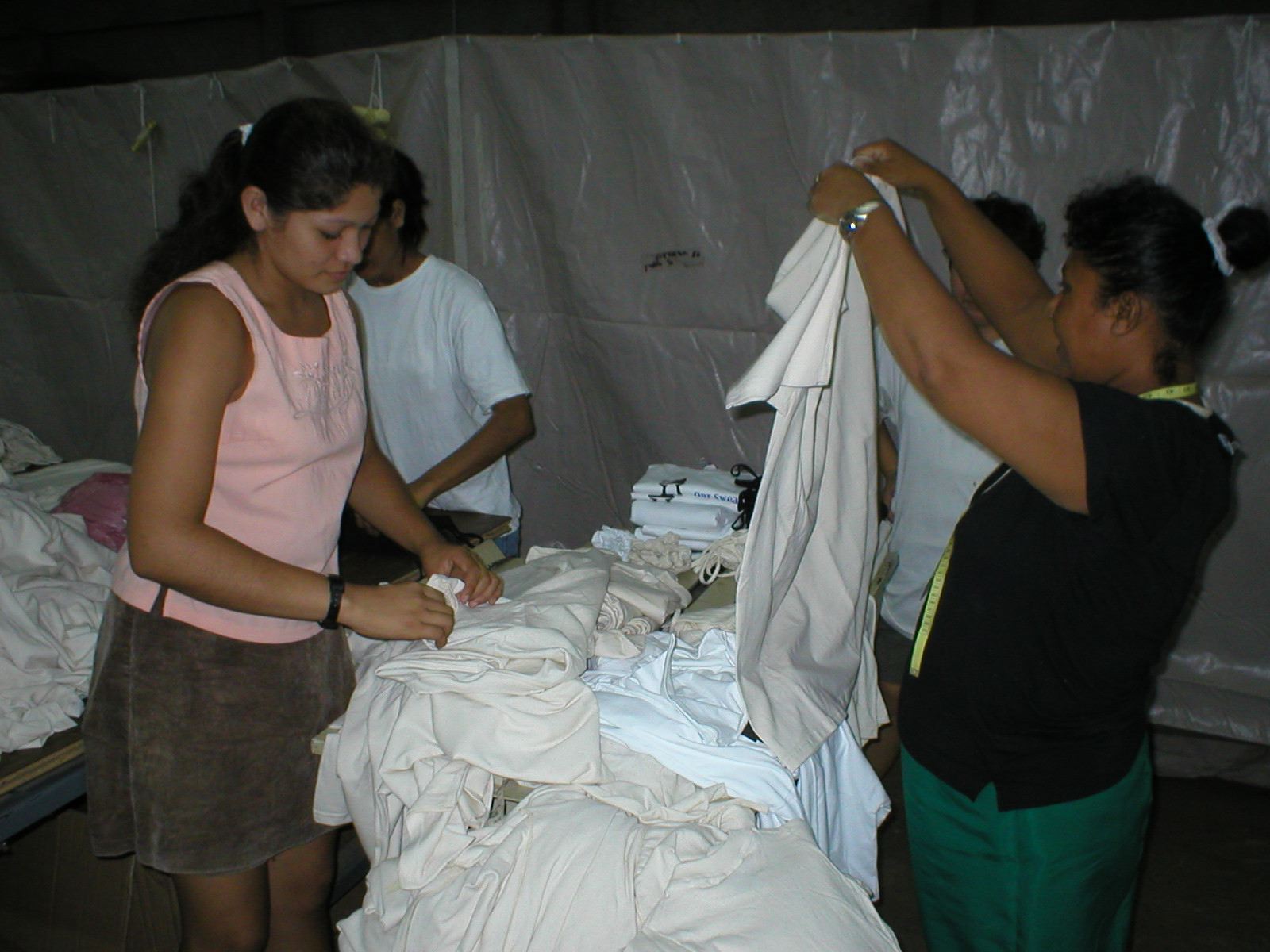
At the Center for Development of Central America, participants
met with the survivors of Hurricane Mitch, who are now own and run
their own sewing cooperative. The women have successfully filled
orders for T-shirts for Maggie's Clean Clothes and other companies
in the fair trade market. The fair trade alternative model is a
good one, but still faces many challenges given undercapitalization
and the continued links with a fickle and demanding global economy.
Participants also saw problems with hand-me-down equipment that
is always breaking down: If these businesses are to succeed in a
competitive global marketplace, they have to be properly equipped
and capitalized.
What was learned?
- The importance of developing and encouraging a fair trade market
- The challenges faced by fair trade companies in the global marketplace
For more information on the coop: http://www.organicclothes.com/pages-beyond/partners.html
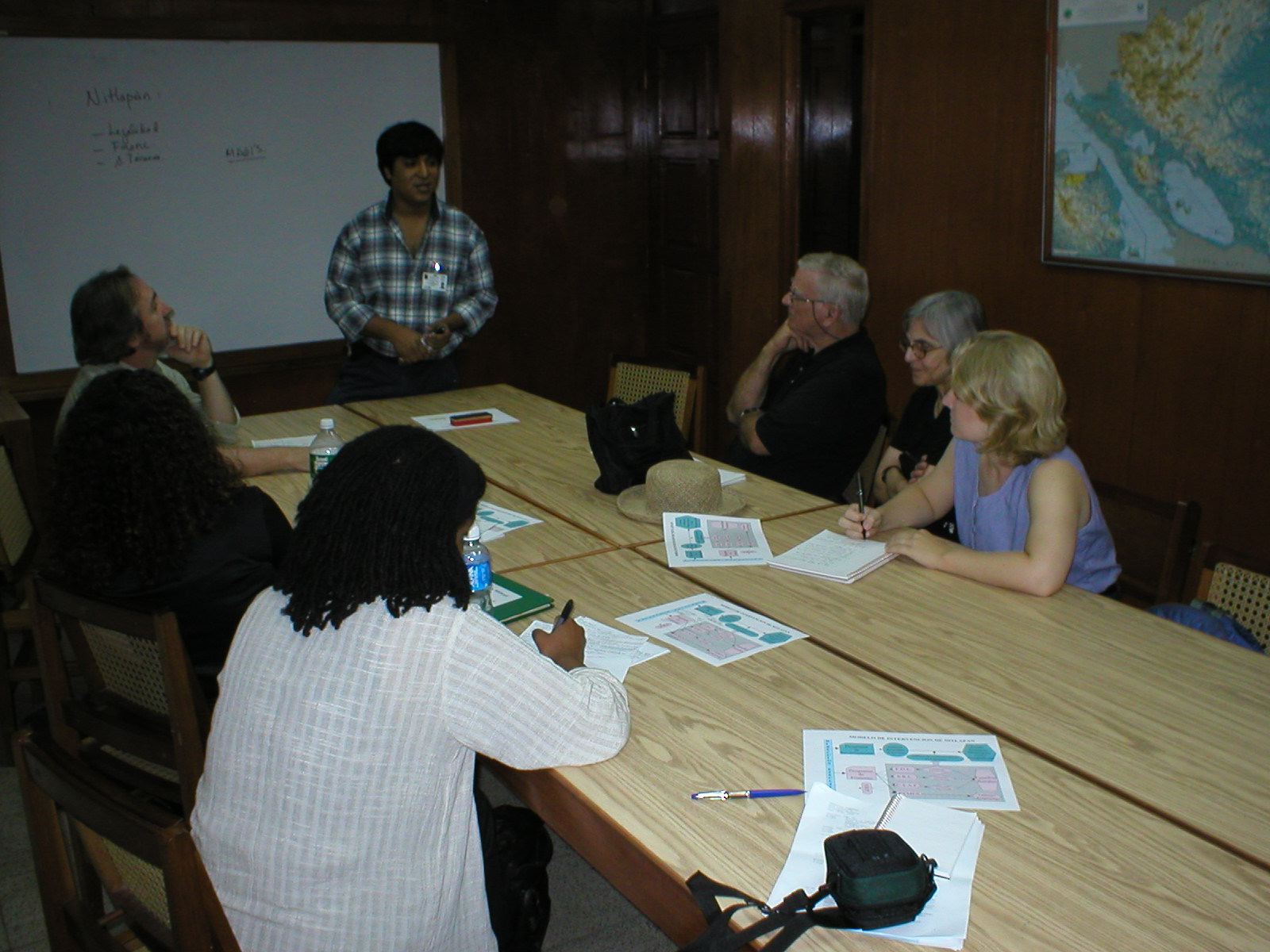
Participants met with Francisco Perez, a researcher at NITLAPAN,
the research and development institute of the Central American University.
NITLAPAN, established in 1989 when a group of researchers planned
to create a peasant university, has proposed a grassroots plan for
rural development as a better alternative than the PPP and other
projects. It offers programs such as financing, legal services and
business development to small farmers, as well as sponsoring research
projects on the impact of microfinance, technology and rural development
policy and migration. Francisco outlined NITLAPAN's vision of "bottom-up
planning" to be proposed to the state for implementation.
What was learned?
- Need to support local vision for development, especially when it is so radically
different from the dominant neo-liberal model.
- The critical role of academic research committed to community development
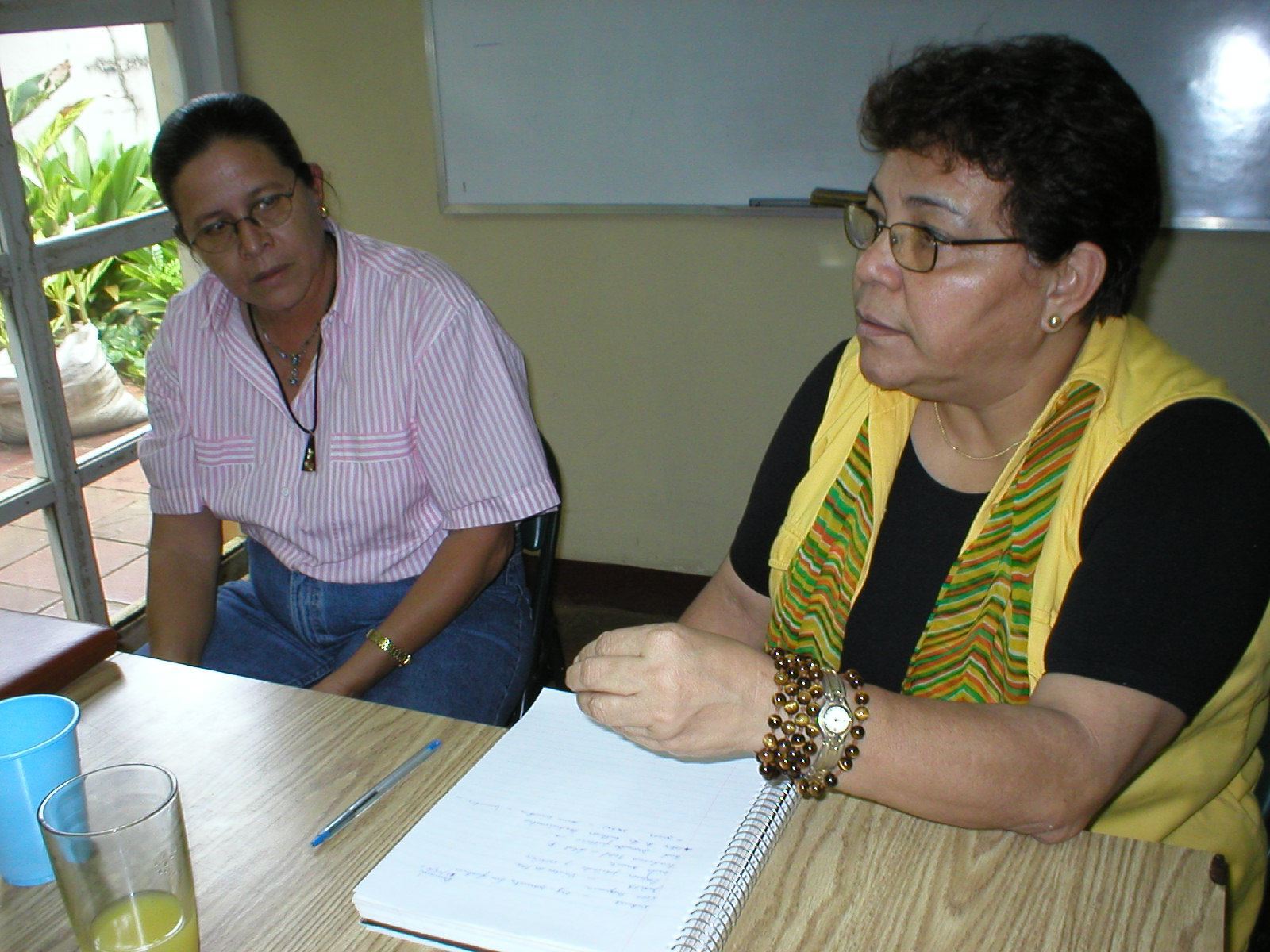
Participants met with Martha Valle, president, and Matilde
Rocha, Executive Director and Vice President of FEMUPROCAN,
the Federation of Women Peasant Producers of Nicaragua. They discussed
the state of the women's movement in Nicaragua, including the need
to fund women and girls first. They outlined some of their programs
in literacy and leadership training, revolving credit funds for
women, and advocacy and lobbying for women's rights, especially
when it comes to land ownership. They identified machismo as a "cultural
matter" that cannot be changed overnight: "Women peasants say they
don't work, their men do, but when you look at everything the women
do, it's difficult for them to understand this as a contribution."
What was learned?
- The importance of putting women and girls first
- The challenges faced by women in a culture of machismo
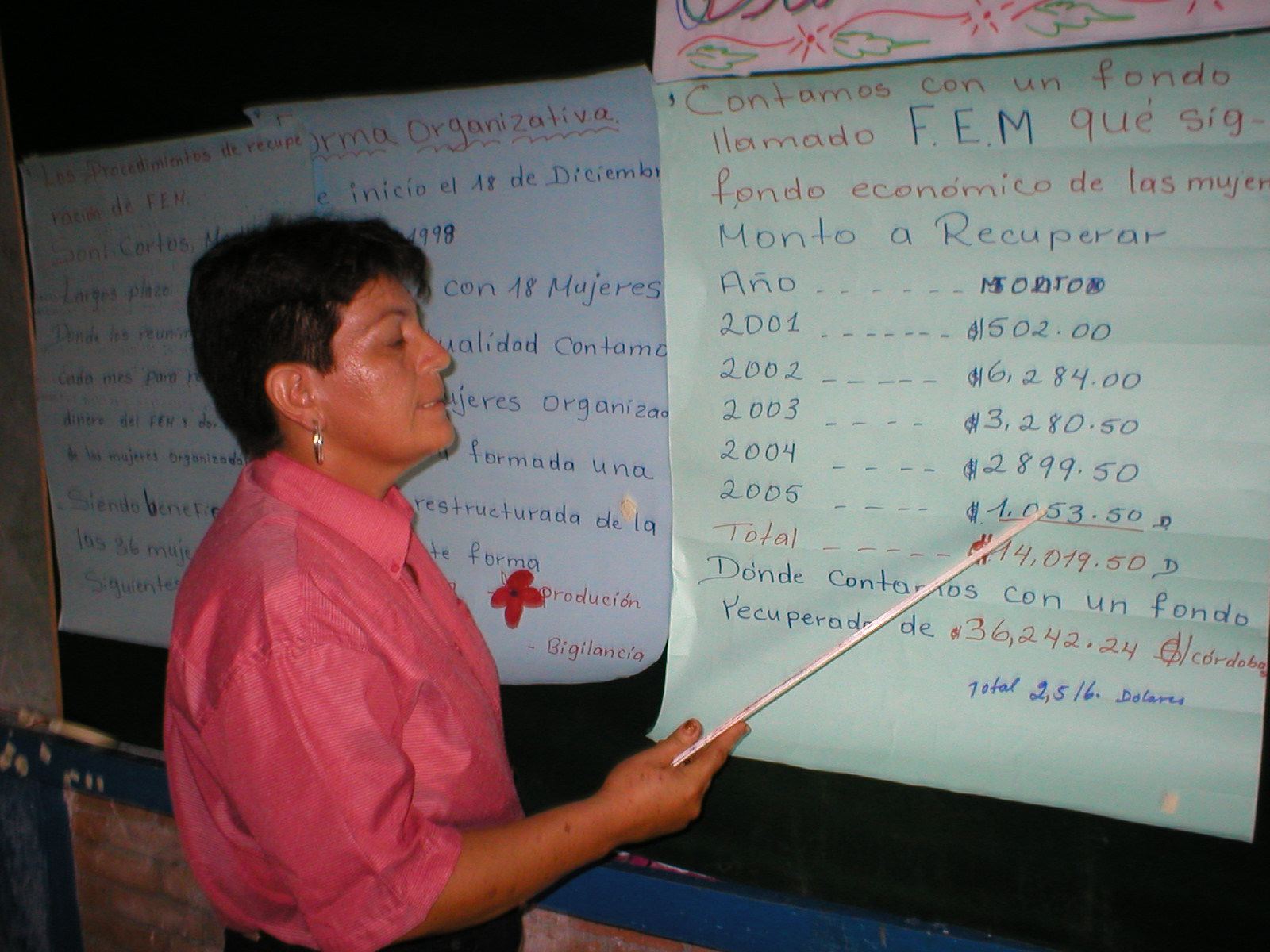
Participants spent the afternoon with Rosa Adelina Barahona,
director of FUMDEC, the Foundation for Women and Community
Economic Development. Several rural communities had gathered to
host a large meeting, where they displayed the results of their
revolving economic funds, created by matching funds from FUMDEC.
As an example of a successful project, a community used its funds
to buying farming equipment to develop a sustainable income by growing
vegetable gardens. One man said he was grateful for the women's
groups because "now he felt he could trust his wife with the responsibility
of working on a farm."
What was learned?
- The importance of local vision and local leadership by women, and how men
are accepting it
- How a revolving fund works and how it can succeed
At the Association of Network of Women of Condega, participants
met with Florinda Benavides, ex-judge and now legal advisor
to the Network, and Luisa Centeno, coordinator. Both women
discussed the state of violence against women and children in Nicaragua,
and how they are addressing it. Although they have no shelter for
the women and their families, the network provides safe houses,
as well as counseling, psychological services, and an innovative
extra-legal system for adjudicating disputes. The Network, well
respected in the community, sends out an "invitation" to the perpetrator
and acts as an arbitrator, drawing up agreements between the parties.
It also runs workshops against sexual violence for children and
adolescents, which has risen along with the unemployment in the
area. Asked about the causes of abuse, Luisa said, "this was a theater
of war and it continues to be." She described the continuity of
violence from Somoza's regime through the Sandinista revolution
and said that change could come through the education of children
and the transformation of the minds of adults. "But the financing
of intangibles is difficult. We don't need money for chickens; we
need money for the power to change, to speak."
What was learned?
- The pervasive influence of a culture of violence and its impact on women and
children
- The difficulties of funding what are perceived as "services"
Amanda Centeno, coordinator, and Helen Shears, a British
development worker, of the Women Builders of Condega, met
with participants to discuss their organization of women carpenters,
bricklayers, and welders who train other women in non-traditional
jobs. They displayed samples of their wood furniture, and they explained
why their vision is so radical in Nicaragua. Participants also visited
houses that had been built by the women and in which Nery Gonzalez,
and Ariana Gonzalez, master carpenters, were installing internal
partitions. The hand-crafted but functional houses, so different
from many of the large-scale construction projects financed in the
wake of Hurricane Mitch, each have their own vegetable gardens,
and they are allocated to women in need from the community.

What was learned?
- How women in nontraditional work can be a radical vision
- Importance of appropriate housing to the well-being of a community
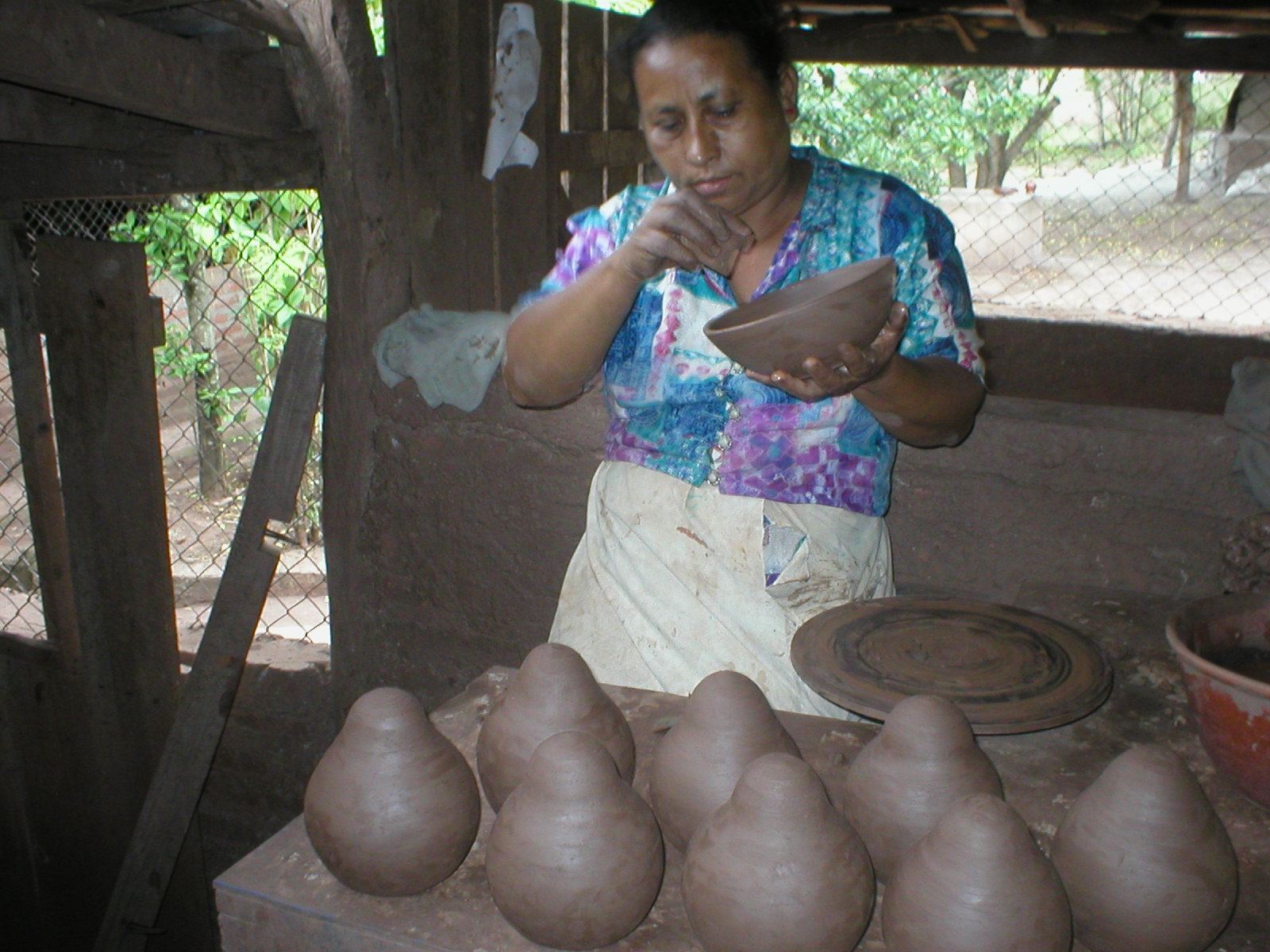
At the Ducuale Women's Pottery Collective, participants met
with Vilma Guevara, Simona Guevara, Santos Guevara, Maria
Figueroa, Cristina Carazco, Dora Mairena, Maria Asunción
Córdoba, Maritza García, the founders of this
group of women potters who have had contracts with fair trade organizations.
They described how they were approached with a large order from
Pier I Imports and accepted with the help of Potters for Peace.
Although they tried to complete the order in the time allotted by
contracting to outside workers, there were problems with quality
control, and they ended up with a loss. Their sole distributor,
Pro Arte, is no longer in business. The collective's members receive
their salaries according to what is sold.
What was learned?
- The challenges of integrating into a demanding and undependable global economy;
grassroots groups may not have the capacity or desire to integrate.
- Importance of maintaining traditional crafts as a connection to the past and
to identity.
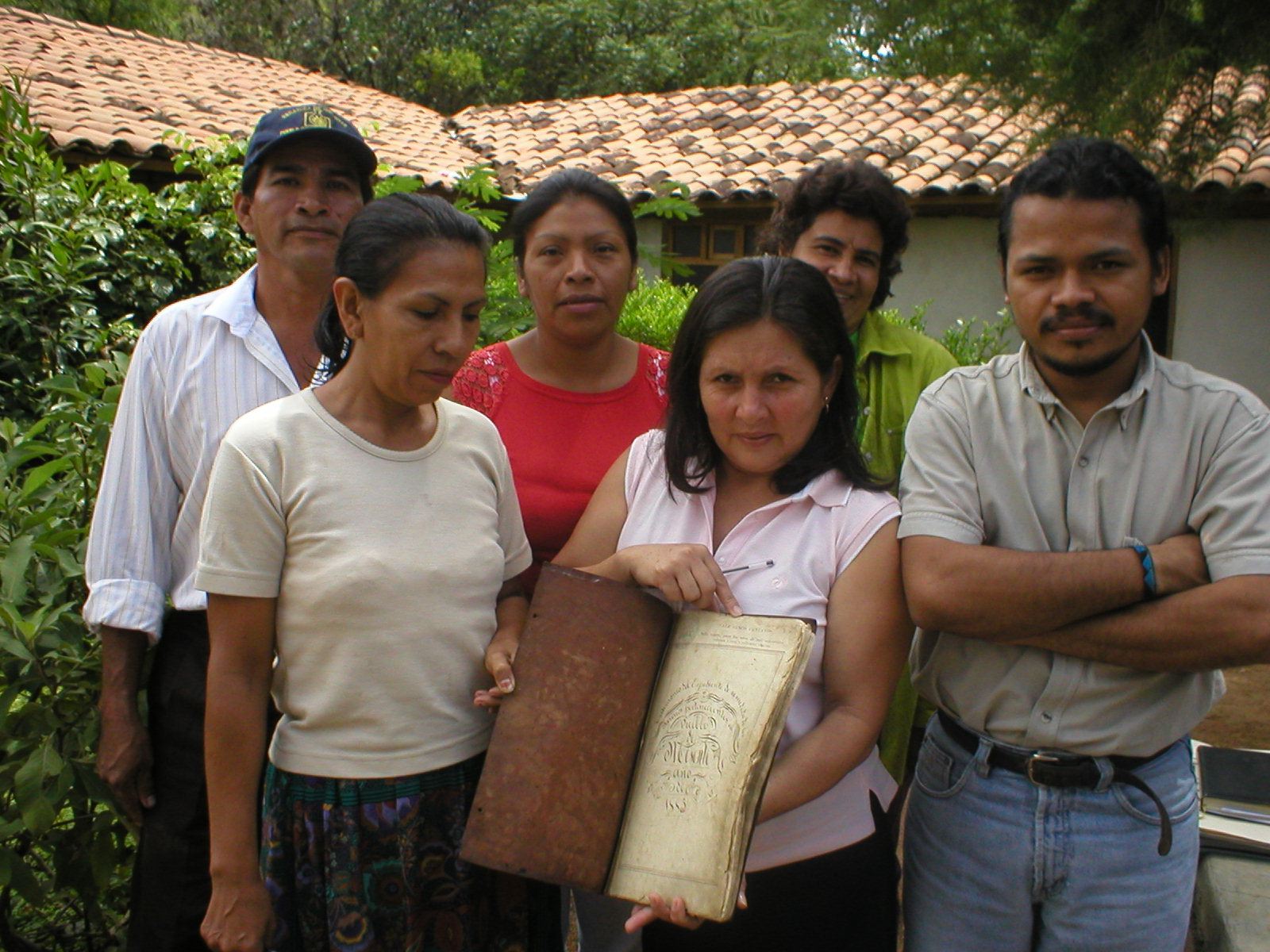
Participants met with the Indigenous People of Mozonte, which
has women occupying the leadership positions of President of the
Board and President of the Council of Elders. Consuelo Rivera,
president of the board of directors; José Miguel Gómez,
vice pres. of the board, Ligia del Carmen Vanegas, secretary
of the board, Marta Regina López, member of the board;
and Carlos Lenis Cruz, anthropologist, proudly displayed
their original land title from the Spanish Crown, which was first
issued in 1773 with the reissue date of 1883. They have developed
their own strategic plan, and their major goals are to strengthen
their identity and culture, be self-sustaining and recover their
land, manage and protect their own resources, strengthen their institutions,
and promote gender equity. According to Carlos, some major obstacles
to achieving these goals are the foreign and minority ownership
of land in their region, along with the "individualistic conception
of ownership" versus the "Mozonte collective culture." When the
women were asked whether they were feminists, they quickly replied,
"We're not feminists, because we'd just be doing the opposite of
machismo. We want our rights respected; we want to be taken into
account and overcome imposed roles."
What was learned?
- The diversity of issues indigenous communities face as they struggle to survive
- Importance of their autonomous vision for future and the inclusion of women's
leadership in that vision
Participants met with Azucena Zelaya and Dilsa Herrera
of SOYNICA, which trains women in Mozonte on processing protein
rich alternatives based on soybeans and in starting microentreprises.
They discussed the nutritional status of poor children in Nicaragua
and how simple interventions in agriculture can dramatically improve
them. Participants also visited CICO (Child Care Center) in Quisulí,
and met Norma López, the SOYNICA promoter there. Later
they visited the demonstration plot of Alba López,
where they saw a worm farm that provides natural fertilizer, and
an example of contoured row farming, which helps irrigation and
soil conservation.
What was learned?
- Importance of educating women about alternative food sources and farming
- Significance of producing crops for local consumption and not exports as the
first priority.
back to top
HONDURAS
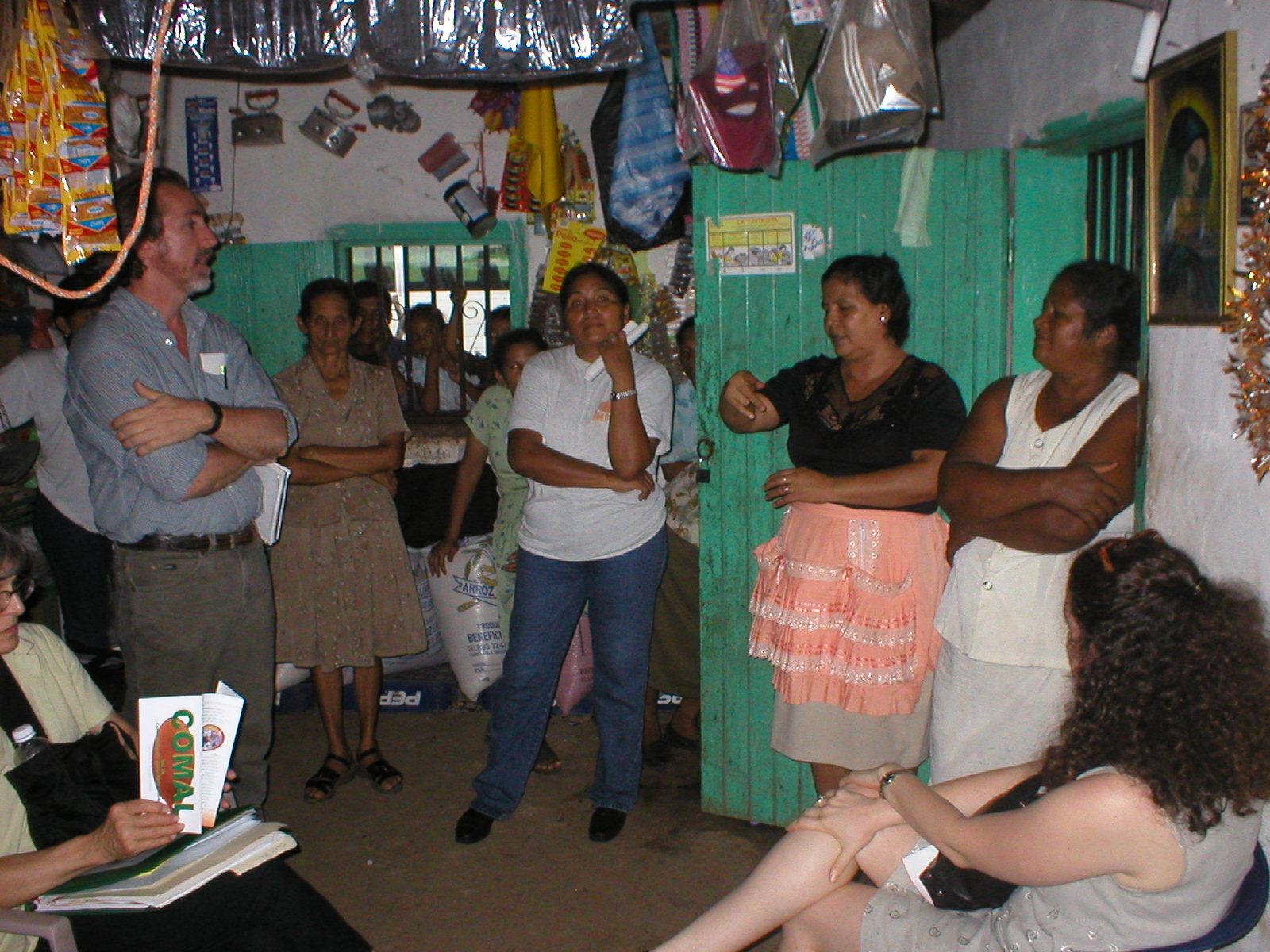
Maria Rosada, national board member of COMAL, took the group
to visit the COMAL store in La Constancia, where they met with the
shareholders/members, Eloise de Jesus Obando, Maria Herminia
Guido, Guillermina Herrera, Maria Alisa Gonzalez and Maria
Intima Gonzalez, treasurer, as well as Rodas Chavarria
from COMAL. COMAL is a network of grassroots regional commercialization
projects that provides credit and runs community stores to lower
prices for consumers and increase prices for producers. The values
of COMAL are "just weighing and just pricing. We don't want to buy
from the peasant and sell to the buyer at a profit," said Maria.
The women in La Constancia had contributed their own money to start
the store, and their husbands had helped them build it; they said
they would prefer to sell and buy Honduran goods although the store
sold imported goods. They also had a fund for community members
in need. Participants also visited a cashew for export processing
facility owned by cooperative, which shares some members with the
COMAL store in La Constancia.
What was learned?
- Importance of local production, local commerce, to support local people first.
- Preference for Honduran products and why that's good.
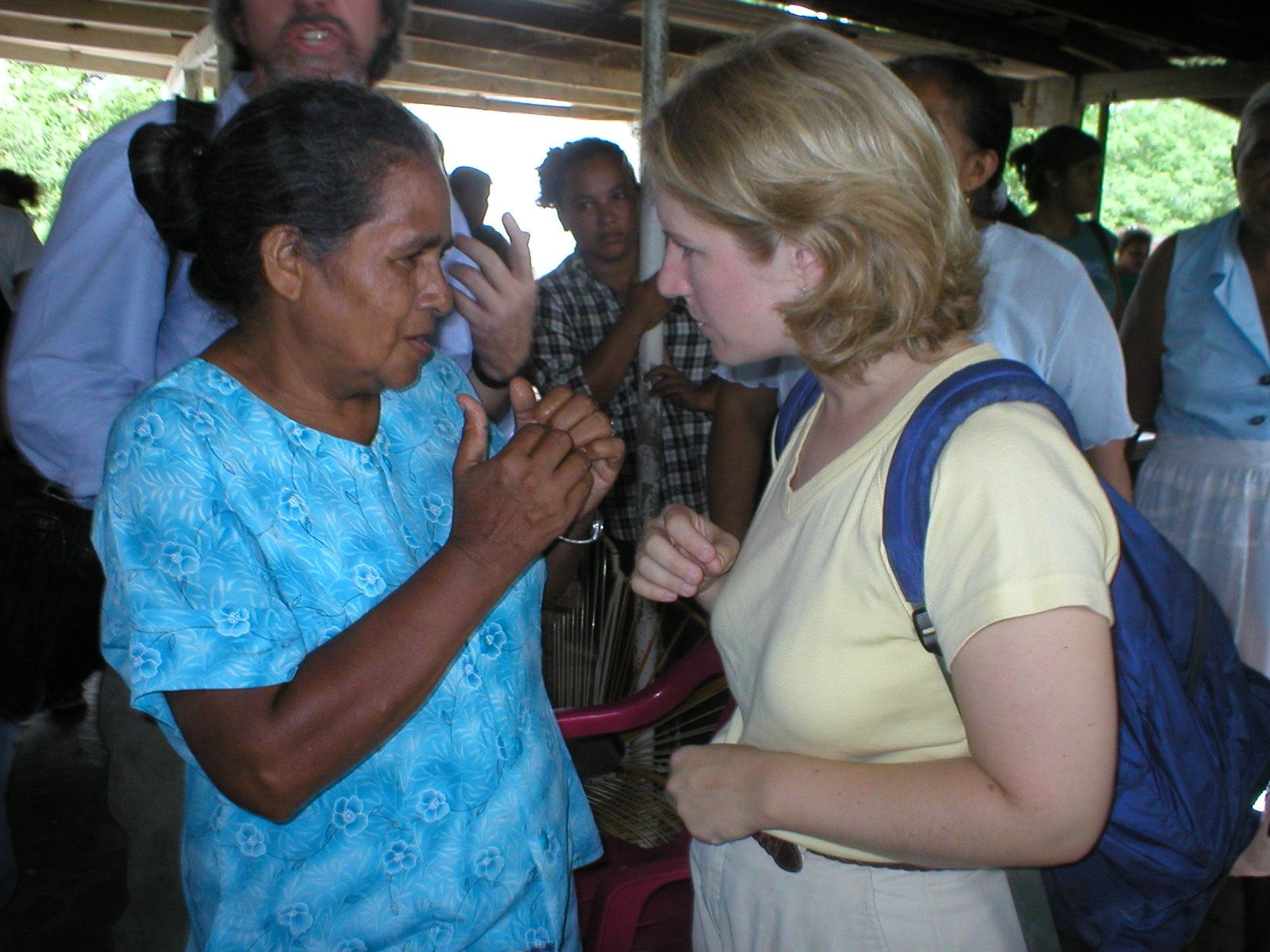
Participants attended a spirited assembly of 12 groups of women
who two months ago received land from the National Agrarian Institute
(agrarian reform office) in the Hacienda of "Las Hormigas." The
assembly was hosted by Maria Concepcion Betanco, president
of CHMC, the Honduran Federation of Women Peasants, an umbrella
organization for five different groups. "Structural adjustment policies
have put a noose around our neck," said Maria. Members of CHMC presented
the products of their small-scale rural industry, such as disinfectant
and liquid wax. Participants also visited the land of two of the
women's groups who received land. Also present with Maria were:
Ana Rosa Flores, secretary of Projects and National and International
Relations, Deysy Ibarra, secretary of Finances and master
of ceremonies for the event, and Wilfredo Torres, technical
advisor to CHMC. "For a long time, men spoke for us and took things
from us," said one woman, "but then we decided to join together."
What was learned?
- The difficulties faced by small-scale rural industries and farming trying
to compete with larger businesses
- The importance of tapping to the power of hope and solidarity
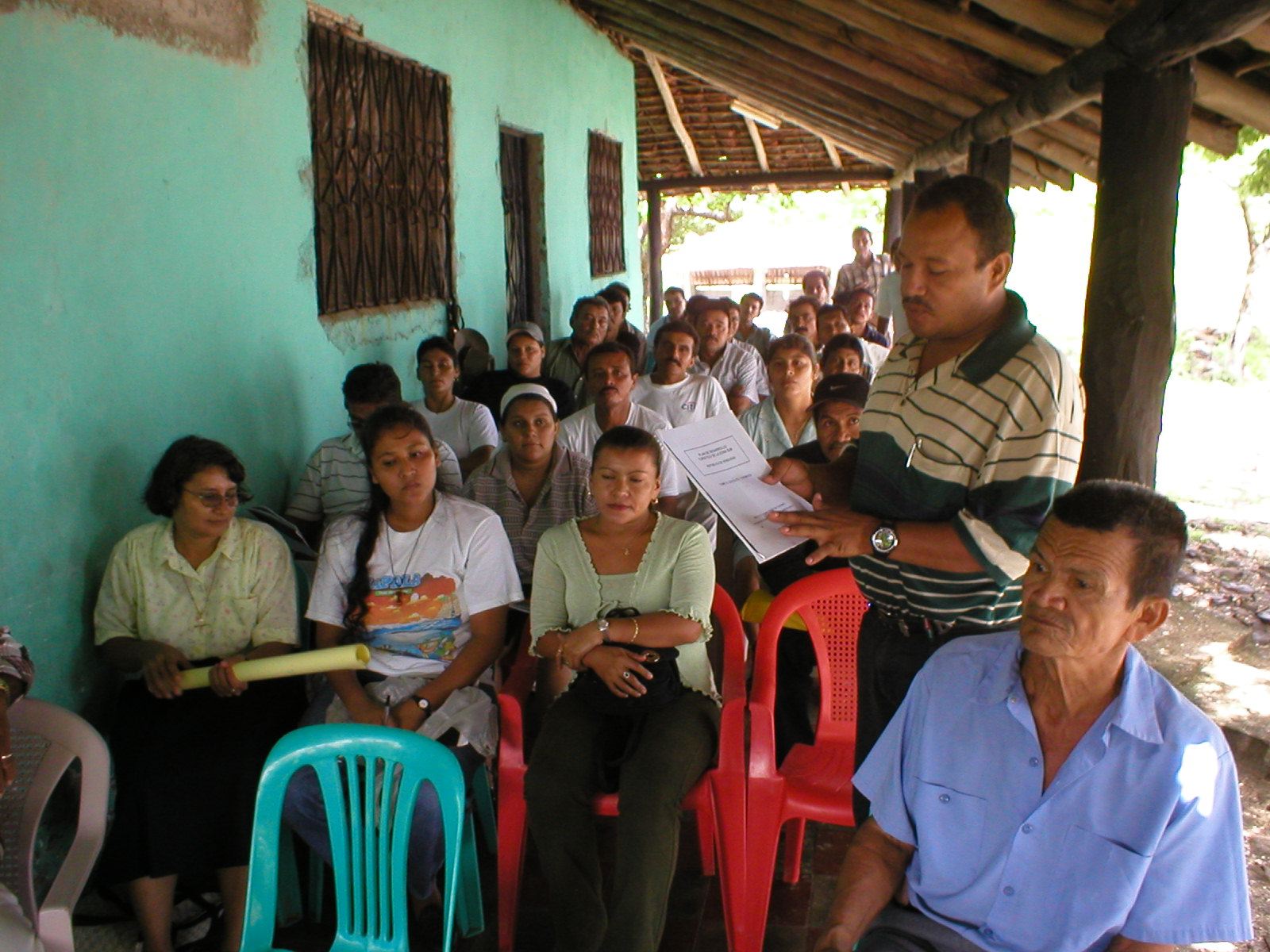
Participants first met with Rudy Degrandes, director of Citizen Participation
Program for CARITAS-Choluteca. Rudy's program's mission is to "attack the
root causes of poverty and empower communities so they make proposals and demands
on the government, taking their destinies into their own hands." This could be
done by reducing the social and environmental vulnerability of communities and
through social auditing, demanding that laws be respected and helping communities
shape the policies that affect them.
Rudy took participants to Zacate Grande, where they met
with the members of 10 CODESOLs (Comité de Desarrollo
y Solidaridad), who have united to challenge a powerful landowner
and politician who is trying to usurp their land, situated in a
fragile ecological zone now coveted for development of vacation
homes for the rich. Participants were taken on a boat ride around
the peninsula, and they saw first-hand how this landowner is trying
to drive the inhabitants from their land by fencing off key areas
and preventing fishing. Rudy described how the CODESOL of Zacate
Grande was seeking strategic advice from peasants of the lower Aguan
Valley, who were successful in their battle to recuperate their
land. The Zacate Grande CODESOL wants to use ecotourism for sustainable
development and is currently preparing a court case to reclaim their
land, which they have the right to live on according to previous
Honduran agrarian reform laws. Some of them have received death
threats for their efforts.
What was learned?
- The key role of land reform in the struggle for justice in Honduras
- The importance of collaboration among grassroots groups, especially in the
face of concentrated wealth and power
On the last full day of the travel seminar, participants went to
the Tegucigalpa office of ADP, Actions for Populational Development,
for a brief overview of the institution. ADP is part of the Collective
of Women Against Violence, another umbrella organization of women's
groups composed of some 14 different women's organizations. Participants
met with Emma Mejia, institutional director, Argelia Hernandez,
administrative assistant, Luz Marina Barahona, accountant,
Maria Belen Rosales, director of the Shelter, and Jorge
Guerrero, administrator and director of the credit program.
They provide holistic attention to women, which includes the only
shelter for women and their children in Honduras and are a national
reference point for women victims of violence. ADP lobbies for laws
against domestic violence and statutory rape, as well as providing
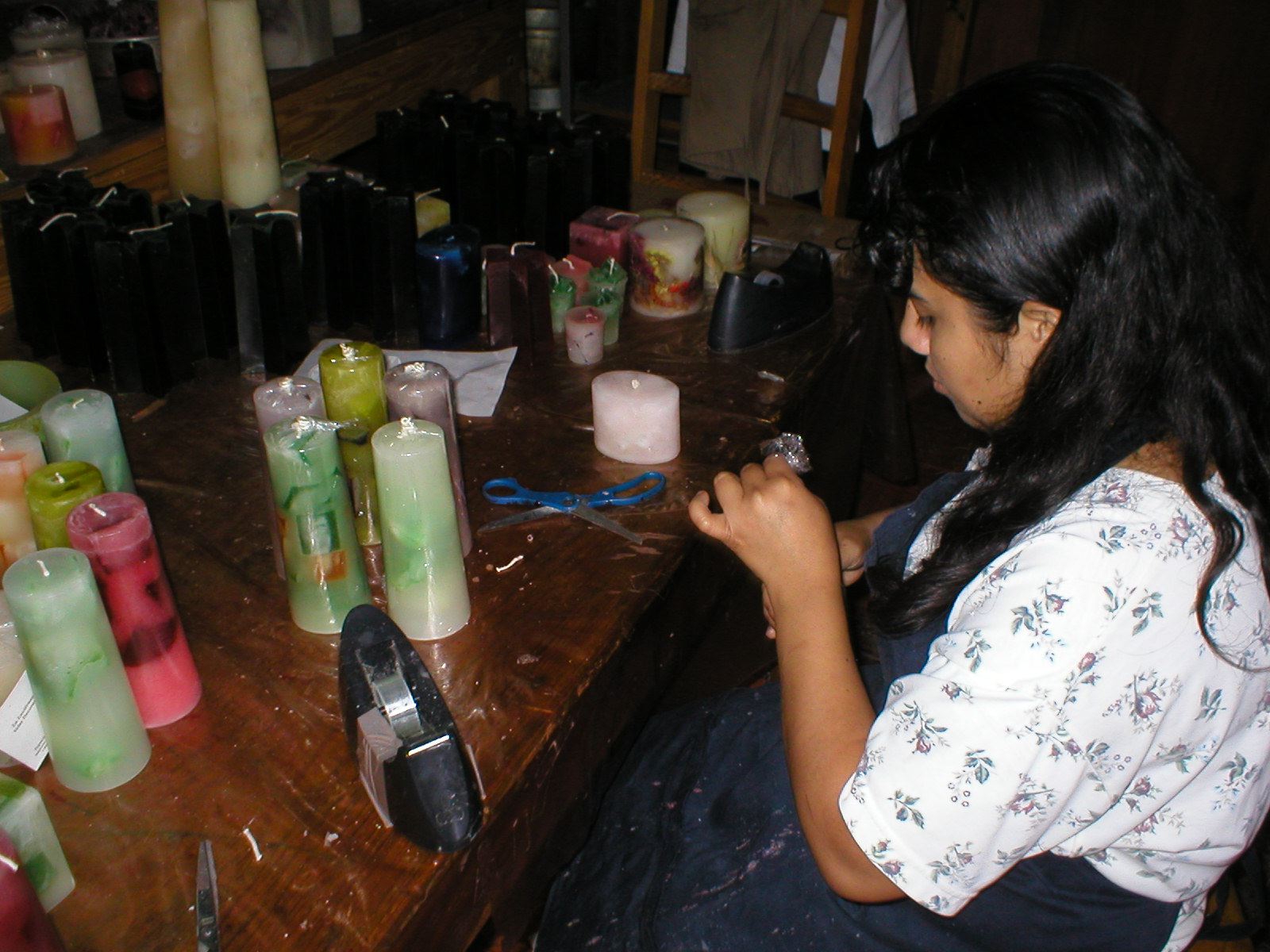
a microcredit and training program for women. The women who live
in the shelter also work in their small candle making enterprise
known as "La Luciernaga." Participants then went to an undisclosed
residential area to visit the shelter and the La Luciernaga candle
workshop. Present at the workshop were: Dora Sarmiento, coordinator,
Berta, packer, Amanda, marketing, Melissa,
design and Marta, who was cooking at the shelter that day.
What was learned?
- The scope of the problem of violence against women in Honduras.
- The innovative candle making shop (with a link to 10,000 villages or their
email?) as a way to generate revenue and provide occupational therapy.
For more information on Ten Thousand Villages, distributor for La Luciernaga
and other fair trade products: http://www.villages.ca.
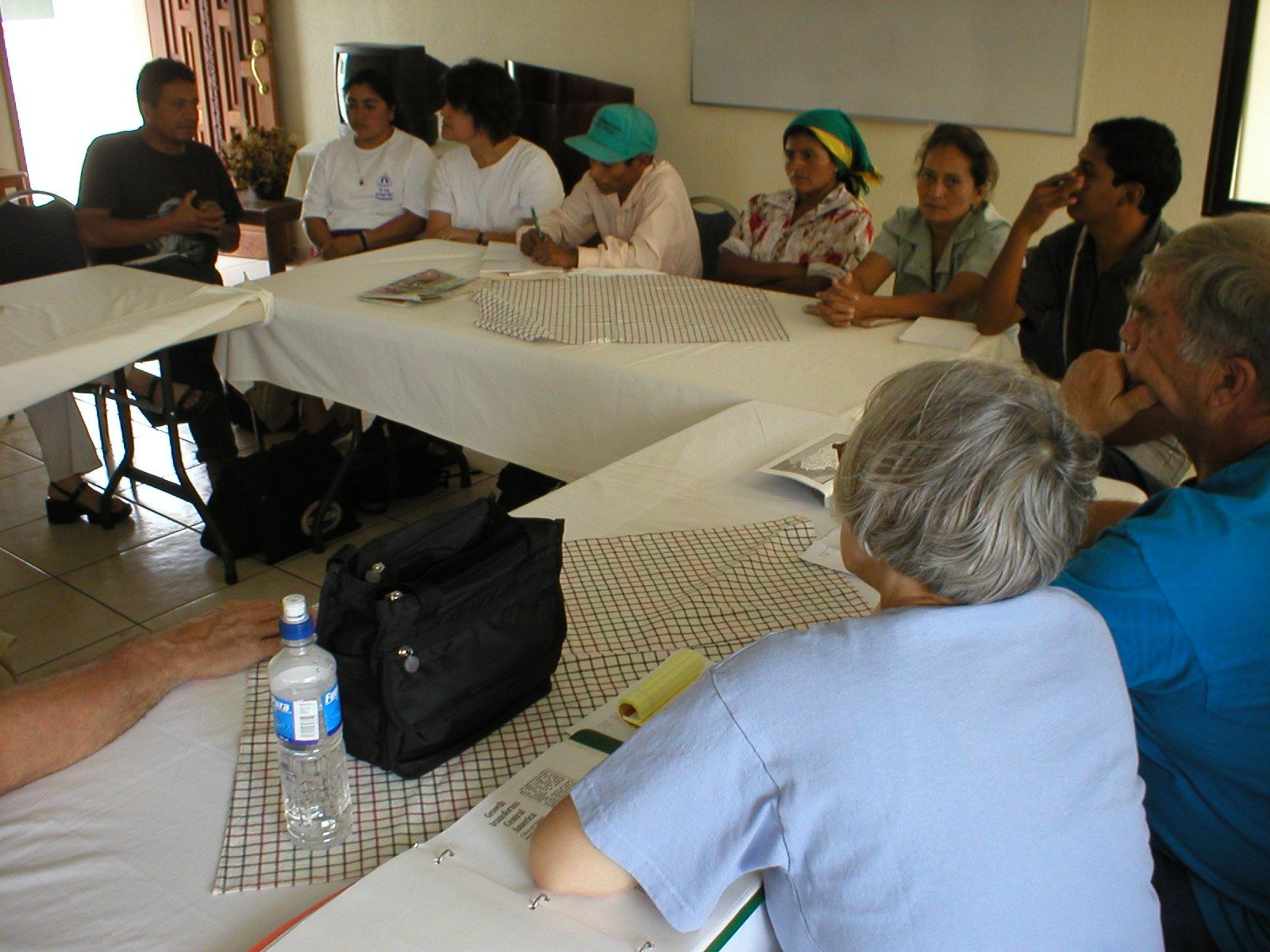
Participants met with representatives of COPINH (Consejo
Civico de Organizaciones Populares e Indigenas de Honduras). Present
initially were Felix Dominguez, projects coordinator, Gloria
Marquez, records coordinator, and Vicenta Gonzalez, Land
Contact person. Later Salvador Zuniga, member of the Executive
Committee, Waldina Herrera, member of Executive Committee,
Ernestina Manuelez, oversight of General Coordinating Body,
and Josué Martinez, member of Executive Committee.
COPINH is currently fighting around water rights, land rights and
against the Plan Puebla Panama, especially the component that plans
the installation of dams, which would flood large extensions of
land. They also participate in larger issues such as anti-globalization
campaigns, and one of their principal leaders is a board member
of EPICA, a Washington based NGO working on Central American and
Caribbean issues. They described the struggle for indigenous rights
in Honduras and the role of water privatization in that struggle.
What was learned?
- The connection between water privatization and indigenous rights
- The history of violence against indigenous groups
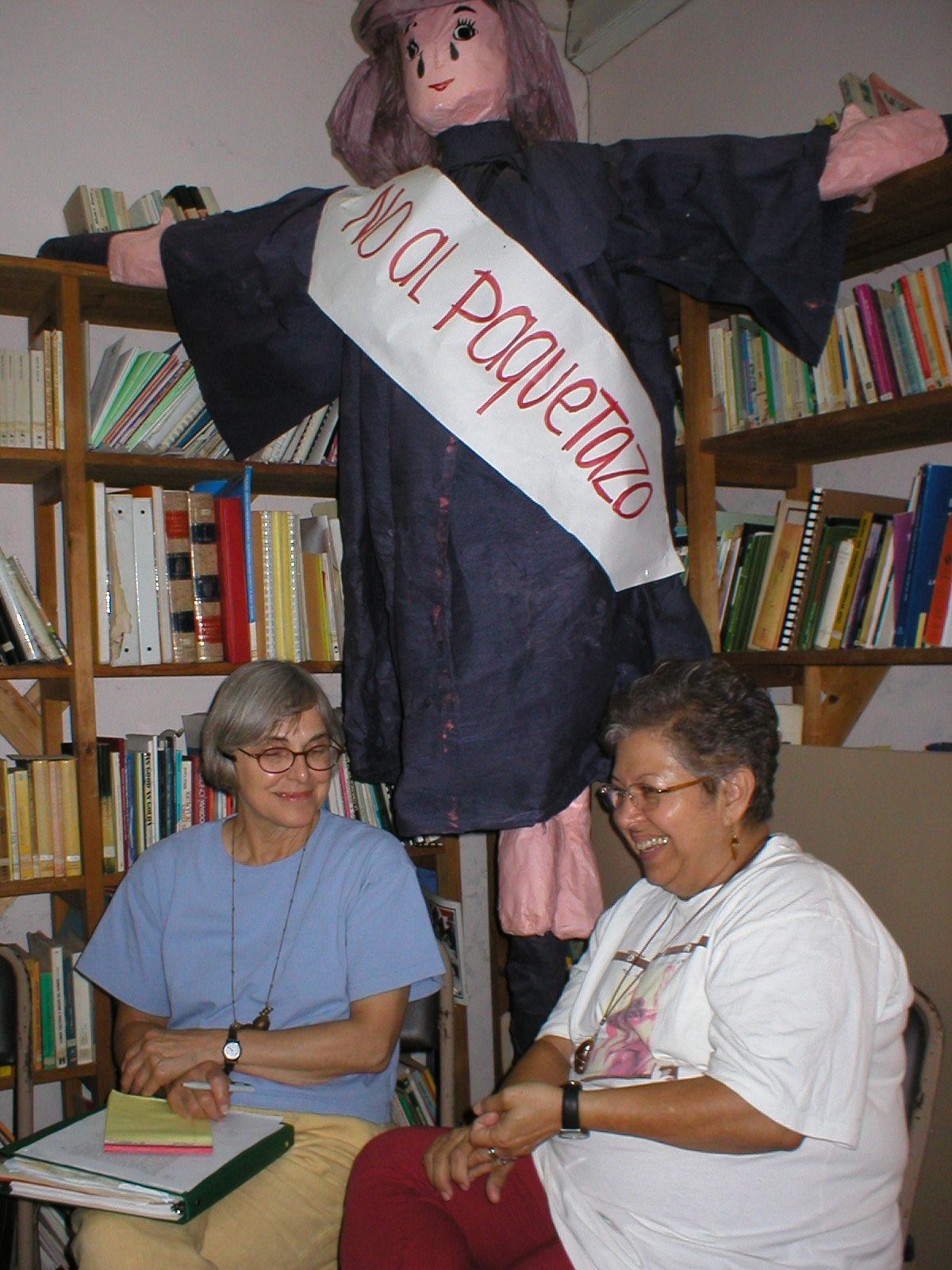
Participants went to the office of Visitación Padilla,
a women's peace organization with a long history and part of the
Convergencia de Mujeres, one of two large umbrella organizations
of women. They met with Gladys Lanza, the national coordinator,
who was elected to represent Women, Children and Youth NGOs on the
on the governmental sponsored Advisory Board for the Poverty Reduction
Fund, along with Maria "Tita" Duran, and Merling Eguigure,
members of the National Board. Gladys described the role of Visitación
Padilla in the Honduran peace movement, including a hunger strike
that led to the abolishment of compulsory military service in 1994.
The group, staffed entirely by volunteers, currently focuses on
the political and civic participation of women, the defense of women's
rights, and the promotion of a "minimum agenda" for women, including
safe abortions, for which the local Catholic Cardinal has denounced
them as "terrorists." It also provided critical support to Honduras'
first gay and lesbian organizations, which held meetings in their
offices. Merling noted, however, that these groups "do not have
legal status in Honduras, and there is much violence against gays."
They described their continuing uphill struggle to get women's issues
represented in the National Assembly, where women are woefully underrepresented.
At the end of the meeting, Gladys said, "Here the banks have security,
and they go through your bags to check if you have a weapon. I said,
I have my weapon -- up here."
What was learned?
- The history of the Honduran women's and peace movements, and the complexity
of being a "feminist" in Honduras
- The struggle to fundraise for salaries and infrastructure
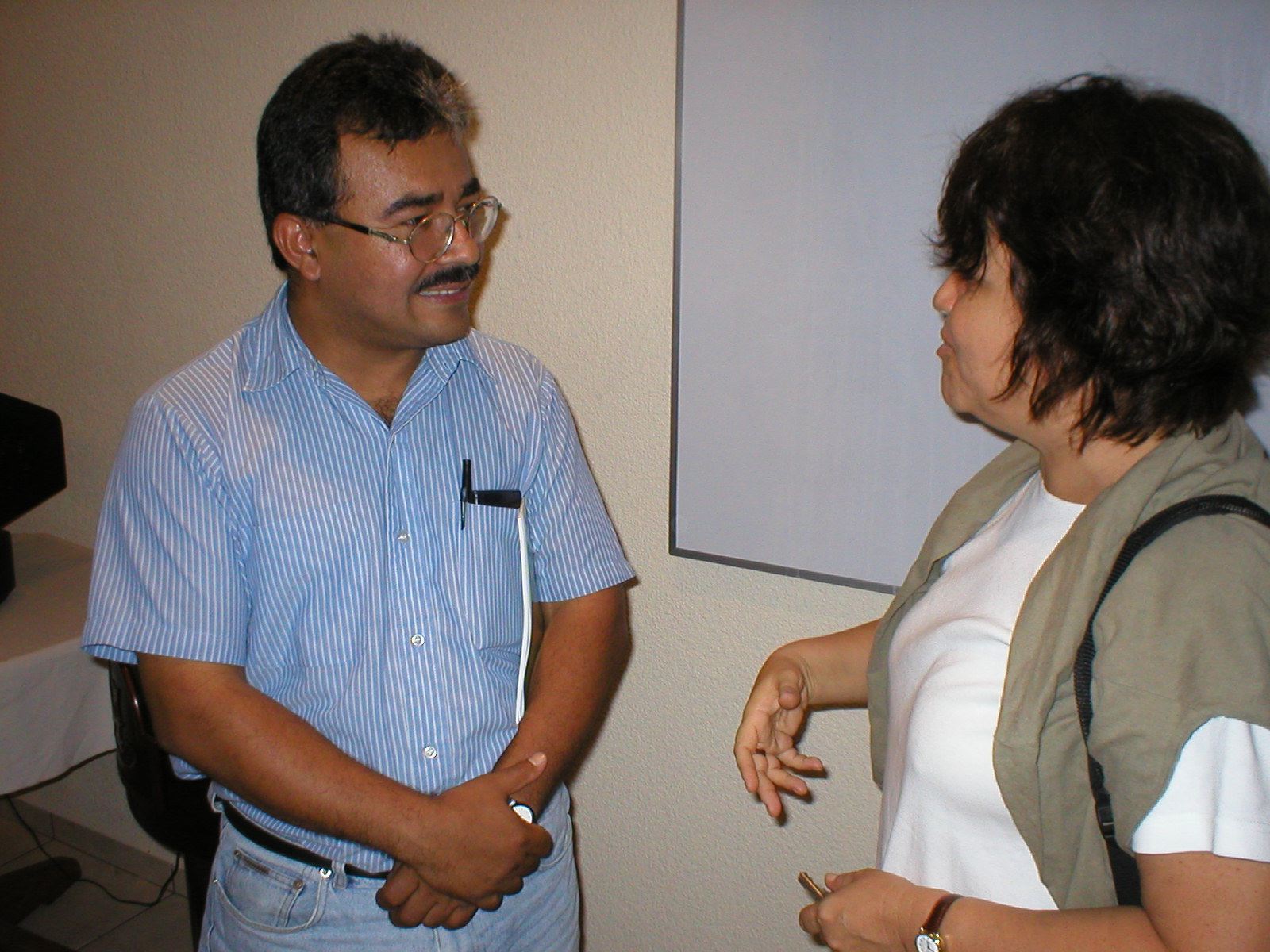
The participants final meeting was with Guido Eguigure,
manager of the Civil Society Program of Catholic Relief Services,
who made recommendations on how grantmakers can maintain respectful
relations with local organizations. Guido, who is Honduran, has
lived and studied in Nicaragua, worked with grassroots organization
in Tocoa in Northern Honduras, and then with the COMAL network,
before working with Catholic Relief Services. He spoke to the group
on role of international aid to local development and the importance
of working with and helping create local networks. He stressed the
need for locals to define the agenda and the solutions, so that
they are active and not passive participants in the process. Guido
also reminded participants to truly see the diversity of local communities
instead of settling for generic or stock solutions.
What was learned?
- Importance of looking at structural issues and supporting advocacy for policy
changes, balancing traditional projects with those that truly empower
- Significance of cultivating horizontal relationships between grantmakers,
grassroots organizations, and local networks, based on mutual
cooperation and respect
back to top
Grantmakers Without Borders PO Box 181282 Boston, MA 02118
Phone 617.794.2253 Fax 617.266.0497
Copyright © 1998-2006. All rights reserved.
For more information contact us at GwoB@gwob.net
Please report any problems with this site to the webmaven
|